What Business Problem Does E-Invoicing Solve in Nigeria?
For many businesses, invoicing still means creating a document, sending it to a customer, and hoping the details are correct.
When a business handles lots of invoices, small mistakes can turn into slow approvals, payment delays, confusing records, and extra work at tax time.
That is the business problem e-invoicing is designed to help solve in Nigeria.
What is e-invoicing?
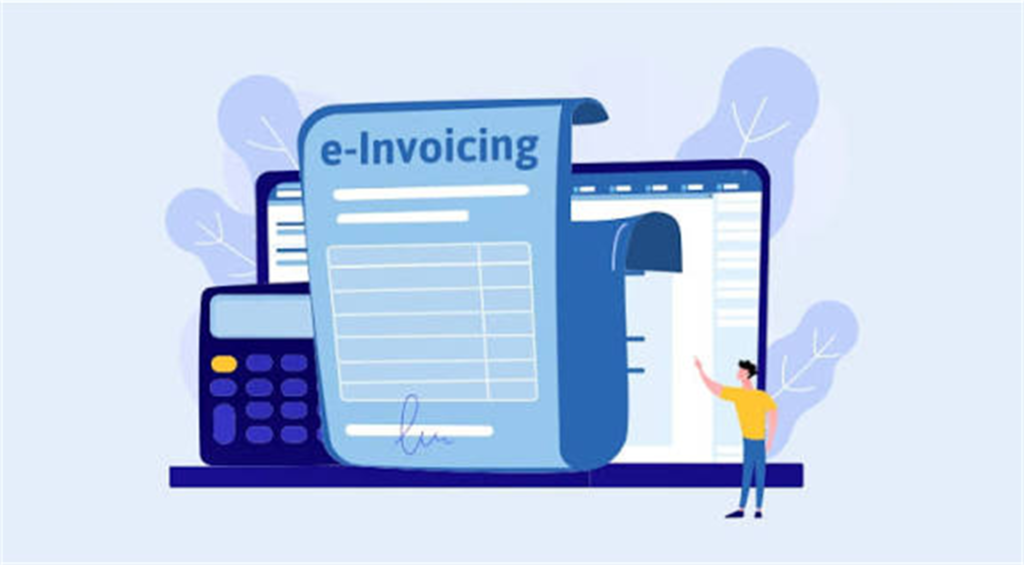
E-invoicing, or electronic invoicing, refers to the process of issuing, transmitting and receiving invoices in a structured electronic format that allows for automatic and electronic processing. This digital approach replaces traditional paper and PDF invoices, offering a streamlined, cost-effective and efficient method of handling invoices.
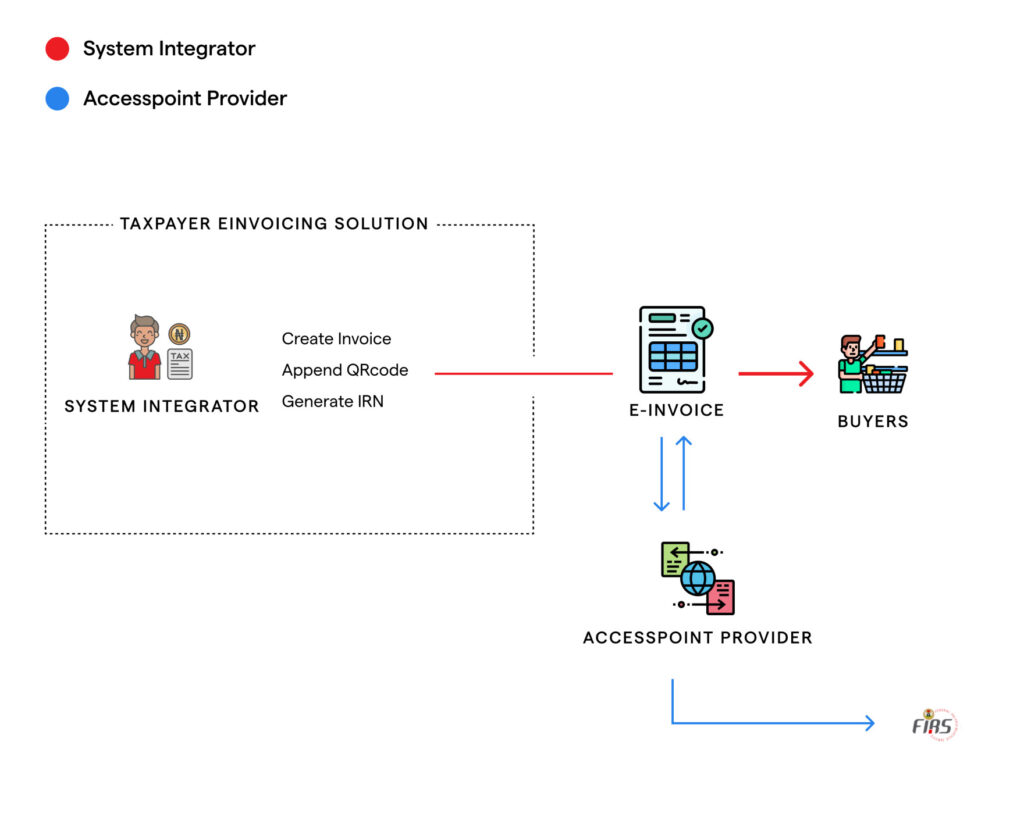
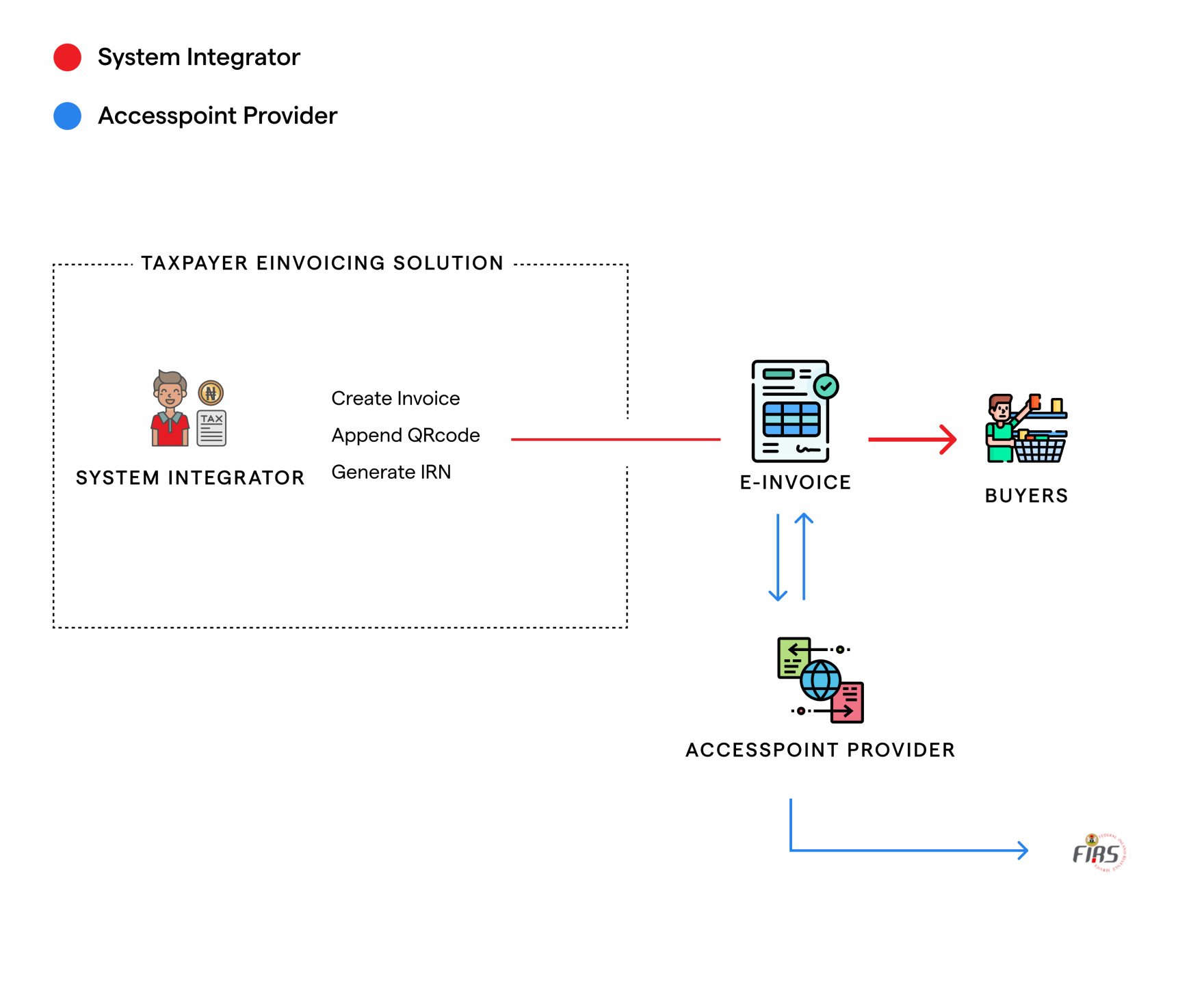
“How invoice data moves through Nigeria’s e-invoicing system.”
Source: NRS e-invoicing documentation.
The problem: invoice information can be hard to manage
A business invoice contains details about the seller, buyer, goods or services, amounts, and tax. When that information is entered by hand or kept in separate systems, teams can spend time fixing missing fields, checking totals, chasing approvals, and looking for the latest version.
Structured e-invoicing helps make invoice information easier for systems to check and process. It can help businesses spot errors earlier, keep clearer records, and reduce some of the manual steps in invoicing.
It also gives finance teams a better way to follow an invoice through its lifecycle: created, reviewed, validated, and shared with the buyer.
What does the NRS requirement mean for businesses?
The NRS is introducing e-invoicing in phases, based on annual turnover. In the published schedule, large taxpayers with turnover above ₦5 billion went live first. Medium taxpayers with turnover from ₦1 billion to ₦5 billion went live on 1 July 2026. The schedule places their post go live review in October–November 2026 and enforcement in January–March 2027. Emerging taxpayers below ₦1 billion are scheduled to go live on 1 July 2027, with enforcement in January–March 2028. The NRS says the dates are indicative and may change, so businesses should check the latest NRS updates for their category. NRS portal · Published rollout notice
Businesses can use the NRS portal or connect their invoicing software through an API route. NRS documentation describes XML and JSON formats for API submissions. The right setup depends on the company’s systems and the service providers it uses.NRS e-invoicing resources
Why prepare early?
Getting ready takes more than choosing software. A business may need to check its customer and product records, tax calculations, invoice approval steps, and how its accounting or ERP system will connect to the NRS process.
Preparing early gives teams time to find gaps, test their workflow, and understand who is responsible for each step. That can make the transition easier when their phase comes into effect.
What TS-Flow solve
TS-Flow is being developed to help businesses organize invoicing, approvals, compliance checks, audit records, and reporting in one workspace. Its product information describes preparing approved invoices for handoff to a configured Access Point Provider (APP). APP connectivity is still pending a provider contract, so businesses should confirm the current integration status with TeamSource.
E-invoicing in Nigeria is about making invoice data easier to validate, track, and exchange. With clear records and a workflow that fits their operations, businesses can reduce avoidable manual work and prepare for the NRS e-invoicing process.
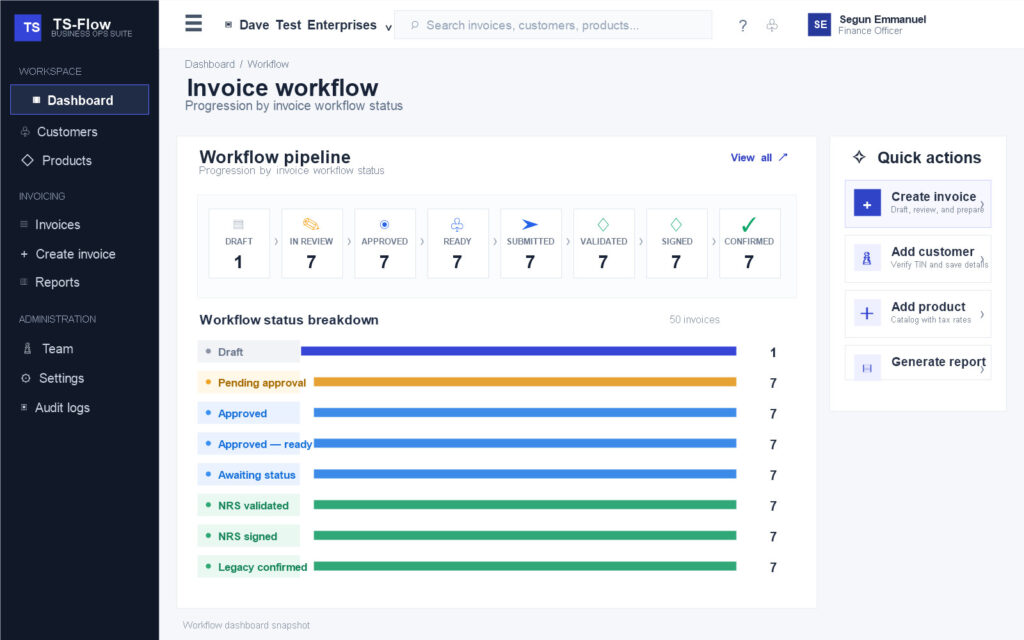
“TS-Flow helps teams organize invoice review and compliance workflows.”
Ready to get started with e-invoicing?
Create your company workspace in TS-Flow and apply to get set up. If your company already has a workspace, ask your administrator for an invitation.